Uncorked is a native iOS app built around a missing philosophy: wine tracking should preserve the memory, not just record the bottle. Available on the App Store.
Client
Uncorked
Role
Product Designer & Developer
Agency
It'sWilder
Summary
The Problem
Most wine apps are designed like inventory systems. You log the bottle, rate it, sort it, and move on. That works if the goal is cataloging. But for most people, wine is not a collection-management problem. It is a memory problem.
The bottle you open on the patio after good news. The one you shared with friends on a random Tuesday that turned into a great night. What people want to hold onto is not just what they drank, but where they were, who they were with, and why it mattered.
That was the gap Uncorked was built to fill.
Insights
This was an opportunity to rethink the category model. Most wine apps treat the bottle as the center of the experience. Uncorked treats the moment as the center.
That shift changed the entire product. The app needed to feel less like a database and more like a journal. Photos mattered. Favorites mattered. Saved wines mattered. The emotional context around the wine was not secondary metadata. It was the product.
Key Decisions
Designing for the first emotional payoff
One of the most important product decisions happened in the home screen architecture.
At one point, I had a segmented control that separated consumed wines from saved wines. It was logical on paper, especially for returning users who already understood the app. But it broke down for new users. If someone logged their first bottle and it landed in a tab they had not discovered yet, the app immediately felt confusing. Their first reward disappeared behind structure.
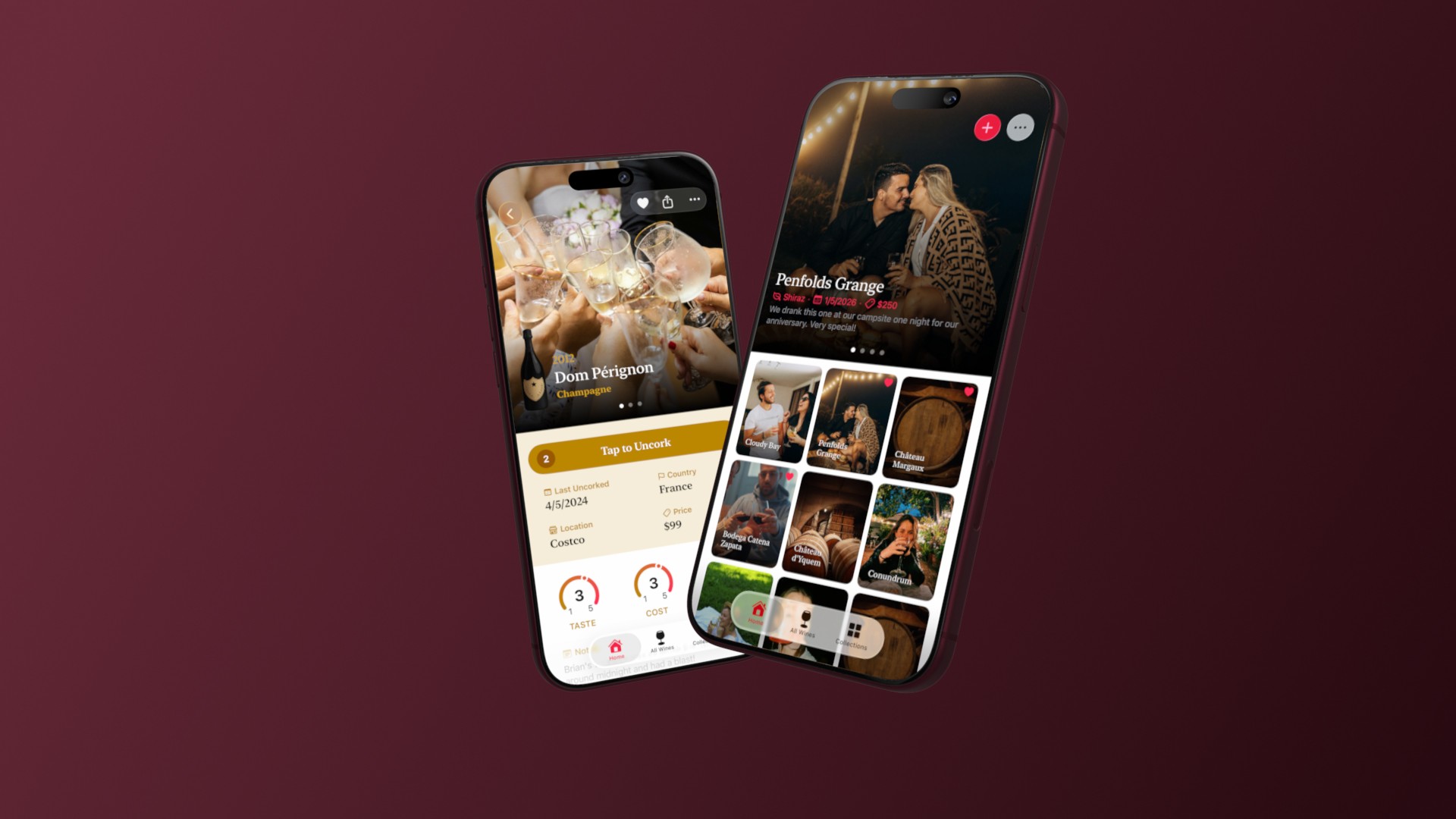
I removed the segmentation and redesigned the home screen as a single surface. Favorites live at the top in a horizontal scroll with user photos. Logged wines live below in a unified grid. That decision made the experience clearer, but more importantly, it kept the app aligned with its core idea: this is a place for your wine memories to live together, not a system for sorting them apart.
Keeping the memory at the center
The detail view followed the same principle as the rest of the app: the memory comes first. Photos sit large at the top of the screen, full-width and visually dominant, because they are the emotional center of the experience. Below that, I added a tappable Uncorked button to count how many times a wine had been enjoyed, turning repeat logging into something a little more celebratory. Only after that does the app move into the more utilitarian information, when the bottle was last opened, where it came from, where it was bought, and what it cost if the user chose to include it. Ratings come later. The hierarchy was deliberate: memory first, utility second.
Development
I started the project in Apple Freeform, sketching the core views, mapping the navigation, and figuring out which features actually deserved priority before making a single visual decision. The goal was to understand the experience first: what needed to be on the home screen, how someone should move through the app, and which moments mattered enough to shape the app around them.
Only after the user flows felt clear did I move into Figma to design the interface and component system. From there, I built the app in SwiftUI and created the supporting website in Framer. That process mattered to me because I wanted the product to be guided by user experience and information hierarchy first, not by visual polish.
Designing for shared experiences
One key insight came from thinking about how people actually drink wine together. At a dinner table, multiple people were often entering the same bottle into their own phones, even though they were all sharing the same experience. That duplication felt wrong. I added a sharing feature so one person could log the wine once, include the photos from the night, and send that full entry to everyone else who was there. That turned the product from a private log into something that better matched the social reality of the moment.
Brand System
I also developed the full brand identity for Uncorked, including the name, logo, color palette, and type direction. The goal was to make the product feel contemporary and premium without drifting into wine-snob territory. The visual system needed to support the same idea as the product itself: this was about memory, warmth, and occasion, not inventory.
Lessons Learned
Uncorked taught me that good product design starts with deciding what deserves to matter. In a category built around logging and sorting, the more interesting question was whether the product should be organized around utility at all.
That made the project valuable beyond the fact that I shipped it. It showed me how much of product design is really about choosing the right center of gravity, then making every structural decision reinforce it.


